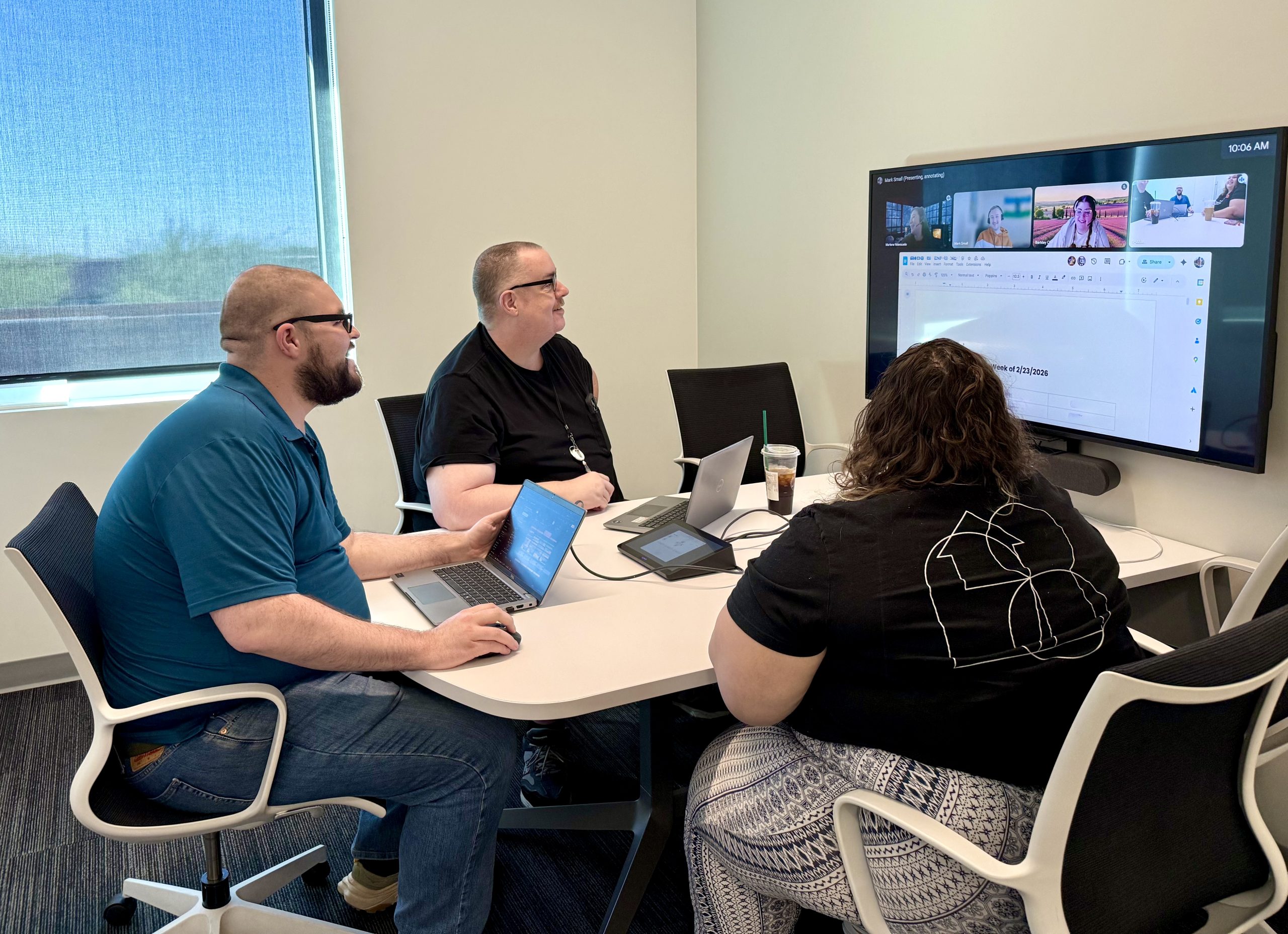
In Realtor.com’s Scottsdale office, RealCollaboration isn’t just a company value – it’s a whiteboard full of live solutions.
While some offices rely on long email threads to bridge the gap between departments, our Scottsdale team thrives on “the huddle.” Whether it’s a Software Engineer sitting with a Customer Care rep to troubleshoot a lead form or a Director whiteboarding a Finance SOP with Sales, we move across organizational lines so that the best perspectives are always in the room. We don’t just work together, we solve the challenges of the housing market in real time.
Here are five ways RealCollaboration comes to life in Scottsdale:
1. We Build Trust Before It’s Needed
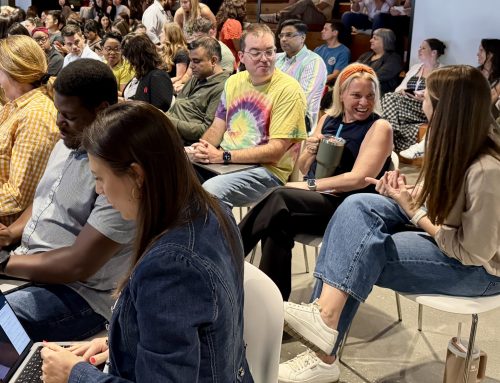
Regular all-hands, team huddles, and culture programs keep everyone grounded in the same goals and language, which makes moving fast easy, since the trust and context are already in place.
“Because we’ve built trust ahead of time, there’s no hesitation,” said Rhonda Alberts, Director, Customer Care. “People jump in, share ideas, and focus on solutions.”
That trust extends to how feedback is handled, as well. “We take engagement surveys very seriously,” said Rhonda. “Every year when results come in, we don’t just review them – we act on them. We talk openly and honestly about what’s working and what needs improvement.”
That transparency builds connection – and that connection is what carries the company through high-pressure moments.
2. We Solve Problems in Real Time
When something is urgent or complex, Scottsdale employees put their heads together. “We’ll quickly pull the right people into a huddle – Customer Care, Sales, Finance, ES – and whiteboard the problem instead of trading long email threads,” Jahnee Tucker, Senior Manager, Customer Care, said. “That can be as simple as walking the floor, grabbing a lead or manager, and solving it live.”
“In Customer Care, things move fast, and that’s why we don’t operate in silos,” Rhonda said. “Leaders are on the floor and we’re solving problems in real time.”
3. The Energy is Contagious
In Scottsdale, RealCollaboration is often modeled by individuals who consistently lift the people around them. Rather than staying strictly in their own lanes, these teammates proactively jump in to support others across departments without being asked.
“It’s about sharing context, helping a newer rep think through a tricky situation, or leaning into cross-team work in a way that makes people feel supported instead of judged,” Jahnee says. This mindset ensures that we aren’t just hitting individual deliverables, but actively working to make our peers more successful. By coaching in a way that builds confidence and recognizing effort, not just outcomes, the team creates a steady, positive presence even when the pressure rises.
“Across the office, there are team members who celebrate wins, check in on their teammates, and bring a steady, positive presence,” added Rhonda. “They coach in a way that builds confidence, recognizing effort, not just outcomes. It’s a mindset that shapes the culture, especially when the pressure rises.”
4. In-Person Connection, Company Collaboration
While Scottsdale is a physical office, collaboration here is deeply connected to teammates across the company, regardless of where they’re located. These in-person touchpoints serve as the anchor for our reach, allowing us to stay aligned with distributed teammates across the business.
For Bharat Mandava, Staff Software Engineer, the only member of his direct team based in Scottsdale, the office creates a fast feedback loop between frontline experience and remote teammates. “I can ask questions, see how reps actually solve problems, then share those concrete stories and edge cases,” he said.
In-person conversations also reshape solutions. Jahnee recalls a Collections and Finance issue that initially appeared to be slow SLAs. “Once we got the right folks together, we realized there were mismatched expectations and no clear SOP,” she said. The discussion shifted the solution from chasing Finance to designing a joint SOP with clear ownership.
Bharat saw similar results while troubleshooting email validation for lead forms, where a quick conversation led to a data-backed fix. And for Rhonda, sitting down with New Hire Training created stronger alignment and proactive problem-solving.
“Once you’ve sat in a room with someone, it’s much easier to read their tone on Slack and have honest conversations about risk,” Jahnee said. “That trust carries over when we’re working with distributed partners.”
5. RealCollaboration is a Daily Commitment
Ultimately, collaboration in Scottsdale is intentional. “We bring to the table concrete examples, data, and recommendations instead of just problems,” said Jahnee. “We have respectful conversations about what’s not working and what we could try differently, then follow through by getting that feedback in front of the right decision-makers.”
Bharat said transparency with distributed stakeholders is key. “It’s important to share design docs early, document tradeoffs, and make sure no one is surprised by decisions,” he said.
“RealCollaboration means being present and accessible, and following through,” Rhonda said. “I want people to know they can talk to me, especially when something isn’t working. There’s genuine care here, from HR to Payroll to frontline leadership. People know they matter.”
Join us in Scottsdale and build a way home for everyone.